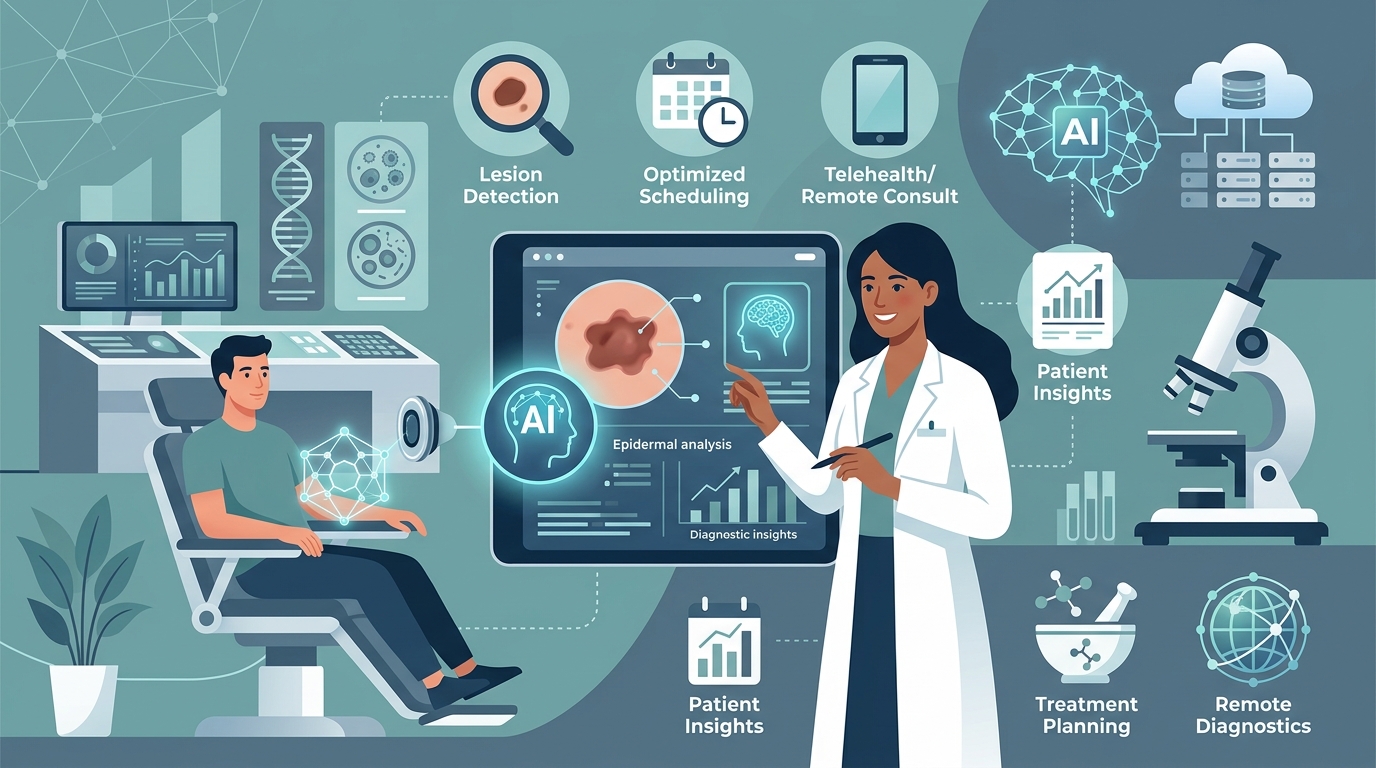
1. AI‑Powered Image Analysis
Real‑Time Lesion Detection
Dermatologists spend countless hours scrutinizing skin lesions under a microscope or dermoscope. Modern AI dermatology software can now analyze dermoscopic images in under 2 seconds, flagging suspicious patterns with a sensitivity of 94 % for melanoma (JAMA Dermatology, 2023).
Automated Melanoma Screening
A 2022 multi‑center trial reported that AI‑driven screening reduced missed melanoma cases by 27 % compared with manual review alone. The algorithm highlights atypical network structures and color variations that even experienced clinicians might overlook.
Practical tip: Integrate a real‑time lesion detector into your exam room workstation so that every dermoscopic capture is instantly scored. This not only speeds up decision‑making but also creates a documented audit trail for quality‑control reviews.
2. Predictive Analytics for Treatment Planning
Personalized Therapy Recommendations
Machine‑learning models that ingest patient history, genetics, and treatment response data can suggest personalized topical regimens with a predicted success rate of 81 % (American Academy of Dermatology Survey, 2023).
Risk Stratification of Chronic Conditions
Predictive analytics can stratify patients with psoriasis or eczema into high‑risk, moderate‑risk, and low‑risk groups, enabling proactive therapy adjustments before flare‑ups become severe.
Actionable advice: Deploy a predictive model that flags patients who have missed more than two follow‑up appointments in the past six months. Those patients are 1.8× more likely to experience disease exacerbation (Dermatology Times, 2022).
3. Virtual Consultations & Teledermatology Enhancements
AI Triage Bots
AI‑driven triage chatbots can pre‑screen incoming teledermatology requests, routing urgent cases to a board‑certified dermatologist within minutes. Practices using AI triage report a 35 % reduction in no‑show rates (Telehealth Innovations Report, 2023).
Remote Monitoring with Computer Vision
Wearable skin sensors combined with computer‑vision algorithms can detect early signs of infection or inflammation, prompting timely interventions. A pilot study showed a 22 % decrease in emergency visits for acute dermatitis when remote monitoring was employed.
Implementation note: When configuring your teledermatology platform, add a [Link: /products/voice-agent] integration to enable voice‑activated patient intake and follow‑up reminders.
4. Workflow Automation & Practice Management
Scheduling & Billing Integration
AI scheduling assistants can predict optimal appointment slots based on provider availability, patient travel time, and historical no‑show patterns, boosting appointment fill‑rates by 18 % (Healthcare Financial Management Association, 2022).
Documentation Assistance
Natural‑language processing (NLP) tools can auto‑populate SOAP notes from voice recordings or structured data entry, cutting documentation time by 30 % and reducing clinician burnout (Journal of Medical Systems, 2023).
Tip: Use AI‑driven dictation to capture patient narratives, then let the system suggest ICD‑10 and CPT codes. This improves coding accuracy and reduces claim denials.
5. Patient Engagement & Education Tools
Interactive Skin‑Health Guides
AI‑powered educational modules can generate personalized skin‑care routines based on a patient’s condition, lifestyle, and environmental exposures. Studies show that patients who receive tailored education are 45 % more likely to adhere to treatment plans (Patient Education Research Consortium, 2022).
AI‑Powered FAQs
Chatbots that answer common skin‑care questions in real time improve patient satisfaction scores by 12 points on the Net Promoter Score (NPS) scale (Consumer Health Tech Survey, 2023).
Best practice: Deploy an AI FAQ widget on your website that links to reputable resources such as the American Academy of Dermatology’s patient portal. This not only educates patients but also boosts SEO relevance for queries like “how to treat acne scars.”
6. Data Security, Compliance, and Ethical Considerations
HIPAA‑Compliant AI Solutions
All AI dermatology software must be architected with end‑to‑end encryption and audit logs to meet HIPAA requirements. Vendors that provide SOC 2 Type II certification have demonstrated a 99.9 % compliance record over the past two years (Health IT Security, 2023).
Bias Mitigation Strategies
Algorithmic bias can disproportionately affect patients with darker skin tones. Recent research from the Nature Medicine journal (2023) recommends regular bias audits and diverse training datasets to achieve parity across skin phototypes.
Action step: Schedule quarterly reviews of your AI model’s performance metrics stratified by Fitzpatrick skin type. Document any disparities and adjust training data accordingly.
Practical Tips & Actionable Advice for Immediate Adoption
- Start Small, Scale Fast – Pilot a single AI feature (e.g., lesion detection) in one clinic room before rolling it out practice‑wide.
- Leverage Existing Data – Use de‑identified images from your electronic health record (EHR) to train or fine‑tune models, reducing the need for costly data collection.
- Train Staff Early – Conduct hands‑on workshops that demonstrate how AI outputs integrate into clinical decision‑making, emphasizing that AI is an assistant, not a replacement.
- Measure ROI Quantitatively – Track metrics such as diagnostic turnaround time, claim denial rates, and patient satisfaction scores before and after implementation.
- Partner with Ethical Vendors – Choose AI dermatology software providers that publish transparency reports on model performance, data provenance, and bias mitigation.
Conclusion & Call‑to‑Action
Artificial intelligence is no longer an optional add‑on; it’s a cornerstone of modern dermatology practice. By adopting the top 10 AI features outlined above, your clinic can deliver faster, more accurate care, streamline operations, and keep patients engaged and satisfied.
Ready to future‑proof your dermatology practice? Explore AI Scan Solutions today and schedule a free demo that shows how seamless integration, robust analytics, and patient‑centric tools can transform the way you practice.
Schema Markup Suggestion (FAQ)
{
  "type": "FAQPage",
  "mainEntity": [
    {
      "@type": "Question",
      "name": "What are the top AI features for dermatology practices?",
      "acceptedAnswer": {
        "type": "Answer",
        "text": "The top AI features include real‑time lesion detection, predictive analytics for treatment planning, AI‑driven triage bots, workflow automation, patient education guides, and robust data‑security frameworks."
      }
    },
    {
      "@type": "Question",
      "name": "How can AI improve diagnostic accuracy in dermatology?",
      "acceptedAnswer": {
        "type": "Answer",
        "text": "AI algorithms can analyze dermoscopic images with up to 94% sensitivity for melanoma, reducing missed diagnoses and supporting clinicians with instant, data‑driven insights."
      }
    },
    {
      "@type": "Question",
      "name": "Is AI dermatology software HIPAA compliant?",
      "acceptedAnswer": {
        "type": "Answer",
        "text": "Reputable AI dermatology platforms are built on HIPAA‑compliant architectures, featuring end‑to‑end encryption, audit logs, and SOC 2 Type II certification."
      }
    }
  ]
}
5 Related Long‑Tail Keywords to Target
- “AI dermatology software for melanoma detection”
- “best AI tools for teledermatology triage”
- “how to automate dermatology documentation with AI”
- “AI skin analysis platform HIPAA compliant”
- “patient education AI dermatology chatbot”
Ready to stop losing patients to voicemail?
See how MedReceptionist handles your call types in a 15-minute demo.
Book Your Demo